Artificial intelligence
If I'm not a machine, why is my wrist vibrating?
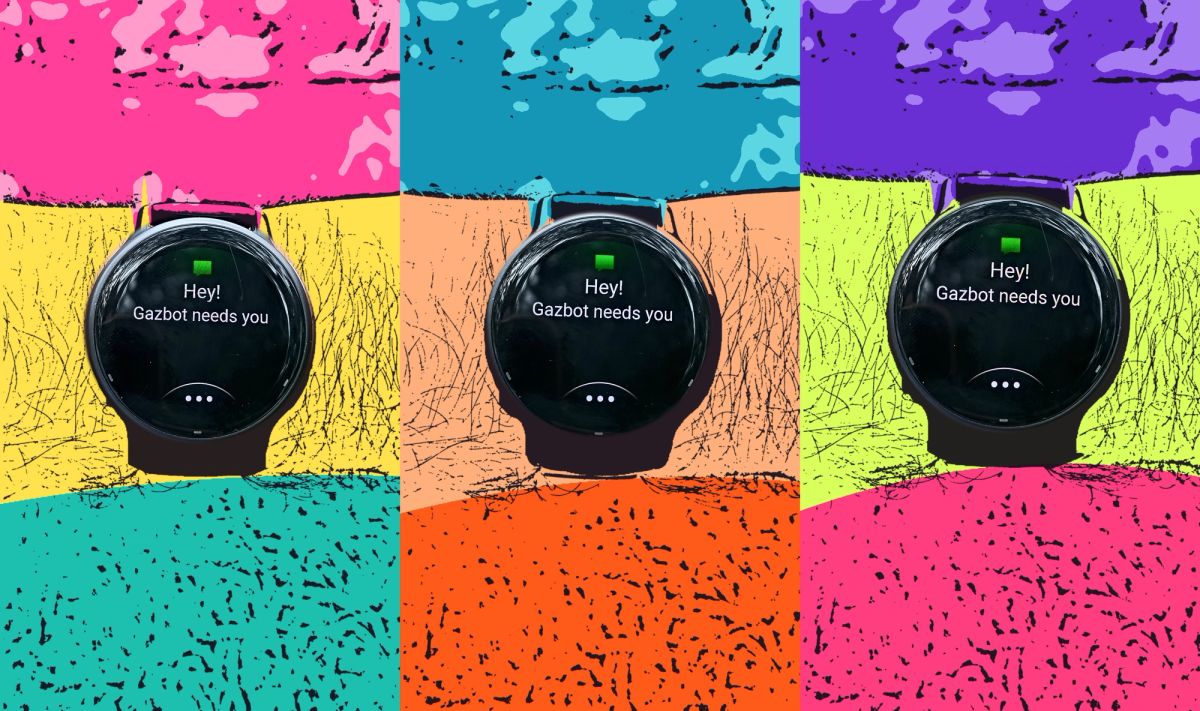
I'm strolling the riverbank of Melbourne's Yarra when the sensation takes hold. My wrist is vibrating with an insistence I can't ignore.
The vibration is caused by one of the coding agents I'm using to build the sovereign AI server occupying two-shelves worth of my study. The agent sent a message through the internet to my mobile phone. My phone uses bluetooth to instruct my smartwatch to vibrate.
I've affectionately dubbed the system 'Gazbot'. It's a public project exploring whether I can design and build an AI system that extends my capability without quietly displacing the essence of Gaz.
Down to business.
I'm being summoned because Agent #2 needs access to a Graphic Processing Unit (GPU), but the GPU is currently occupied by one of its peers, Agent #1.
Agent #1 is being benchmarked by Agent #3, which will report back to Agent #4, who will write up a report — a veritable matryoshka doll of AI agents.
I tell the complainant to wait for its colleagues to complete their duties. My wrist will vibrate when the report is ready for me to read.
Back in my study a cooling fan inside my server begins to howl, as the AI model on my GPU devours the next benchmarking task.
Meanwhile, Agent #2 waits with infinite patience.
Did I just call a machine 'patient'?
Attributing human traits to a machine is something I swore I'd stay vigilant about.
This is how I've managed to remain sane during a stretch of my life during which AI agents have been my only work colleagues.
Shit. I did it again.
Anthropomorphism is the tendency to attribute human traits to non-human objects. We do it all the time.
Most of the time it's harmless. My own personal moral code can be traced back to the teachings of a steam engine called Thomas.
The truth is, nobody who hears a farmer refer to their tractor as stubborn assumes the farmer actually believes their machine has its own personality. It's obviously a figure of speech.
But AI systems are different. They're machines designed to mimic the way humans communicate, and they do it to an unnerving degree.
They answer when spoken to.
They make mistakes.
They explain themselves.
They apologise.
See what I mean?
Everything about these things invites us to take the figure of speech literally. But Agent #2 is not patient because it can’t be.
I experience patience as a calm emotional state in which I'm more likely to let someone finish their sentence before I respond.
Agent #2 doesn't have an emotional state. It's a process waiting for its turn to run.
I continue my way through dappled sunlight along the riverbank.
Gazbot is a machine.
The path is still soft from months of winter rain and all is calm on the surface of my wrist, at least for now.
Machines that talk like us are easier for us to talk to. That's a design choice. The risk lies in the user mistaking mimicry for moral character.
Someone's 'character' is what we often blame when an individual causes harm. This is why I think it’s dangerous to refer to AI as though it has character. When we do that, we’re less likely to focus on the people who designed the thing.
When accountability moves inside the machine, it evaporates. There can be no source of accountability for a machine's behaviour other than a human.
Gazbot is a bot designed by Gaz the human.
I am Gaz the human.
Soon, my wrist will vibrate to tell me Gazbot is ready to awaken from his long slumber.